

Providing feedback to a manager can be uncomfortable. They’re someone you’ve trusted with responsibility, your team relies on them, and their performance influences everyone around them. It’s often tempting to avoid the conversation, drop subtle hints, or hope the issue resolves itself. More often than not, it doesn’t.
The biggest reason feedback falls flat is that it’s either too general, delivered long after the moment has passed, or framed in a way that feels like personal criticism instead of an opportunity to grow. In this article, you’ll learn a practical approach to giving managers clear, constructive feedback that encourages meaningful improvement and creates lasting behavioural change.
Why Feedback To Managers Often Misses The Mark
Providing feedback to a manager isn’t about being overly critical—it’s about reinforcing the standards and behaviours your business needs to succeed. Yet many feedback conversations fail before they even begin because they’re either too vague or left too long. Broad comments like “I’d like you to be more proactive” don’t give managers a clear understanding of what needs to change or how to improve, while waiting until a quarterly review allows minor issues to grow into bigger problems. By the time the conversation happens, what could have been a brief coaching moment has become a much more challenging discussion, making meaningful change far less likely. Regular feedback also protects retention also plays an important role in retaining good managers, as it helps them feel supported and invested in rather than criticised. Equally important is focusing on observable behaviours instead of personal traits. Saying someone is “disorganised” is likely to trigger defensiveness, whereas describing a specific action, its impact, and the desired outcome creates a far more productive conversation and gives the manager a clear path to improvement.
Managers are entrusted with responsibility and authority, so correcting them in front of their team can quickly erode their credibility and confidence. Feedback is far more effective when it’s delivered privately, supported by specific examples, and linked to clear expectations for the future. Combining consistent coaching with appropriate accountability gives managers the guidance they need to improve, while reinforcing the standards expected of them. This approach is far more likely to address performance issues than relying on subtle hints or occasional corrective conversations.
Step 1: Determine Whether You’re Addressing an Isolated Issue or an Ongoing Pattern
The type of feedback you deliver depends on the type of problem you are looking at. Getting this classification right first prevents over-reacting to an honest mistake or under reacting to a recurring habit that is quietly eroding your team.
- Isolated mistake. A one off slip during a busy week or a misread email. A quick correction is enough. Move on.
- Skill gap. The manager is trying, but missing the mark consistently on something new: coaching a struggling employee, running a difficult conversation, or managing a packed schedule. Teach, model, and set one clear next step.
- Repeated habit. The same behaviour has shown up more than once. Missed one-on-ones, sloppy project handoffs, a sharp tone in team meetings. This one requires a structured conversation.
Use a simple decision rule: if the impact stays small and you see improvement within one to two weeks, a quick correction worked. If the pattern is hitting customers, quality, or morale, escalate to a focused discussion built around actions and results, not personality.
Step 2: Be Clear About the Outcome Before You Start the Conversation
The most productive feedback conversations begin with a clear objective, not a moment of frustration. Before meeting with your manager, decide what business outcome you’re trying to achieve, then identify the specific behaviour that is preventing it from happening.
Instead of focusing on how the situation makes you feel, focus on the result you need. Rather than thinking, “This is really frustrating,” reframe it as, “I need decisions to be made more quickly,” “I need smoother project handovers,” or “I want team meetings to be more constructive.” When the conversation centres on outcomes, it becomes easier to discuss performance without making it personal.
It’s equally important to separate facts from assumptions. Describing someone as “disorganised” is a judgement about their character, whereas saying, “Project updates are often submitted after the agreed deadline, which delays the rest of the team,” focuses on an observable behaviour and its impact on the business. Behaviour can be changed; labels simply invite defensiveness.
Finally, resist the temptation to cover every issue in a single meeting. Choose the one behaviour that will have the greatest positive impact if it changes. Keeping the conversation focused gives your manager a clear direction and greatly increases the likelihood of meaningful improvement.
Step 3: Gather a Few Clear Examples Before the Conversation
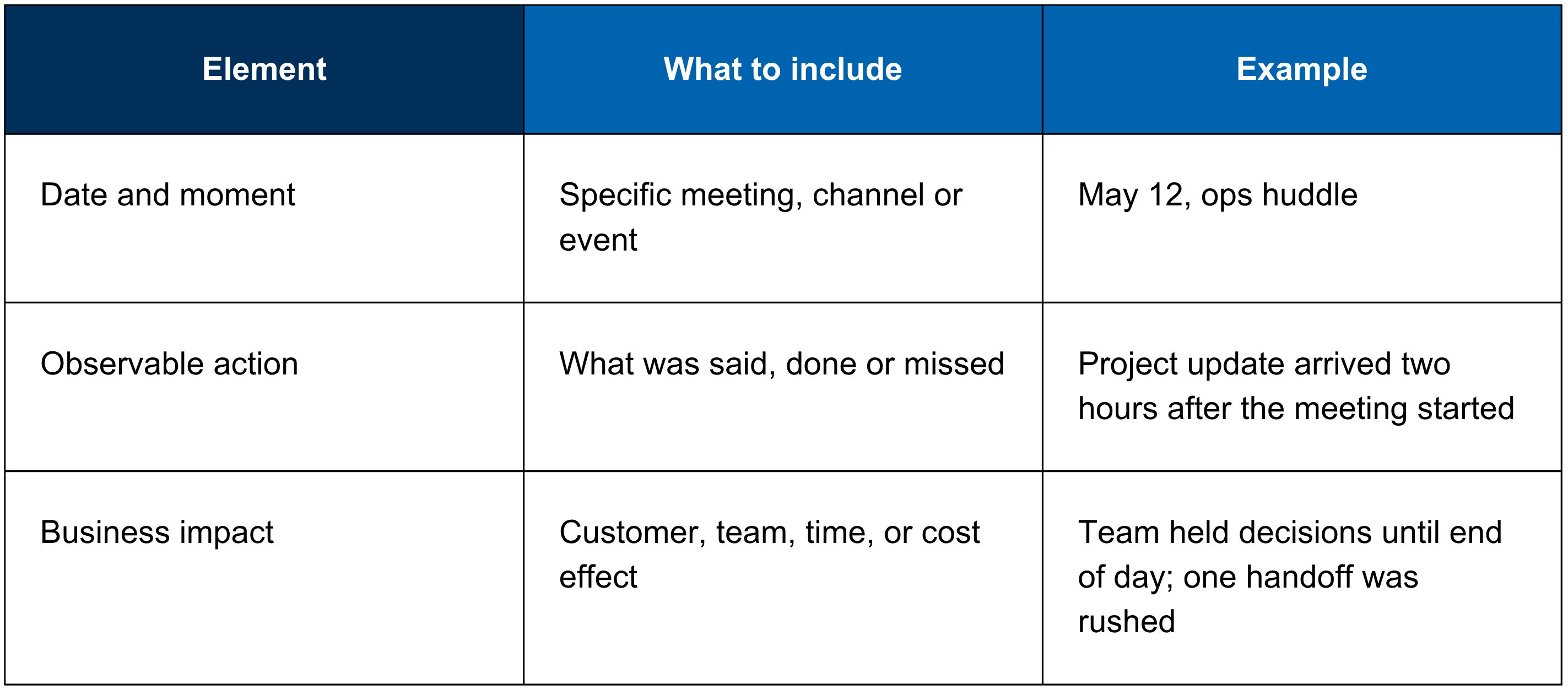
Effective feedback is built on evidence, not general impressions. Before you meet with your manager, identify two or three specific situations that clearly demonstrate the behaviour you want to discuss. Think about what happened, when and where it occurred, and the impact it had on the team, customers, or the business. Concrete examples make the conversation more credible and give your manager a clear understanding of what needs to change.
At The Alternative Board, we refer to this as pure feedback—feedback that is factual, objective, descriptive, and based on observable behaviour rather than opinion or judgement. There’s no need to compile a long list of mistakes. A small number of well-chosen examples is usually enough to demonstrate a recurring pattern while keeping the conversation balanced, constructive, and focused on improvement rather than blame.
Step 4: Connect the Behaviour to Its Business Impact
Feedback is far more effective when it explains not only what happened, but also why it matters. Managers are much more likely to change their behaviour when they understand the impact it has on the business, their team, or their customers. Before the conversation, think through the real consequences of the issue so you can discuss it objectively rather than emotionally.
A simple framework can help keep the discussion focused:
- Describe the specific behaviour. For example: “When project updates are submitted after the agreed deadline…”
- Name the downstream effect in one of four categories: customers (slower responses, weaker client experience), team (rework, morale dips, turnover risk), time (extra meetings, context switching), or money (missed sales, overtime, write offs).
- Quantify the impact wherever possible. For example: “On average, it adds around three hours of rework each week and creates a rushed handover on every project.”
Keep the conversation calm and fact based. The objective is to help your manager understand the consequences of the behaviour and work together on a better way forward—not to assign blame.
Step 5: Choose the Right Time and Place
The success of a feedback conversation depends not only on what you say, but also on when and where you say it. Even well prepared feedback can lose its impact if the timing or setting isn’t right.
Aim to have the conversation as soon as practical after the issue occurs. Timely feedback is more relevant, easier to understand, and gives the manager the opportunity to adjust their approach before the behaviour becomes a habit. Frequent, informal feedback also helps create a culture where these conversations feel like part of ongoing development rather than something to be feared.
Always deliver feedback in private. Managers need to maintain their credibility with their team, and correcting them publicly can undermine their authority. A private setting allows for an open, honest discussion, while giving the manager the opportunity to communicate any necessary follow-up with their team in their own way.
Finally, make sure you’ve allowed enough time for a meaningful conversation. Setting aside 20 to 30 minutes demonstrates that the discussion is important and ensures neither of you feels pressured to rush. At the beginning of the meeting, clearly explain the purpose of the conversation so expectations are set from the outset.
Step 6: Start the Conversation as a Coaching Discussion
The way you begin a feedback conversation has a significant influence on how it unfolds. Those opening moments set the tone and often determine whether your manager is open to listening or immediately becomes defensive.
Start by explaining the purpose of the discussion and the outcome you’re both working towards. For example: “I’d like to talk about how our Monday team updates are running because I think there’s an opportunity to reduce rework and keep projects moving more efficiently.” Framing the conversation around a shared goal makes it clear that the focus is on improving results, not assigning blame.
It’s also important to recognise the manager’s responsibility while reinforcing your own. You might say, “You’re responsible for leading the team each day, and I’m responsible for ensuring we maintain the standards that help the business succeed.” This establishes mutual accountability and positions the conversation as a collaborative effort rather than a disciplinary meeting.
As the discussion continues, remain calm, objective, and focused on observable behaviours rather than personal characteristics. When feedback is based on facts instead of labels, managers are far more likely to leave with a clear understanding of what needs to change and how they can improve.
Step 7: Focus on Behaviours not Personal Labels
One of the quickest ways to derail a feedback conversation is to move from discussing someone’s actions to making assumptions about their character. Keep the discussion centred on what you directly observed, not what you think their intentions were.
For example, saying “When you interrupted Jen twice during Monday’s meeting” describes a specific behaviour. Saying “You don’t respect your team” is a personal judgement that’s likely to trigger defensiveness. Facts encourage reflection; labels encourage disagreement.
Avoid guessing why the behaviour happened. Instead, explain what you saw, then invite the manager’s perspective by asking, “How did you see the situation?” This keeps the conversation collaborative and makes it easier to find a constructive way forward.
The Alternative Board Principles
The Alternative Board calls this “pure feedback”: descriptive, non judgmental, objective, and verifiable. It gives the manager something to act on rather than something to defend against.
Step 8: Listen Before you Offer a Solution
Once you’ve shared your observations, give your manager the opportunity to explain their perspective. Asking for their view first encourages a more open conversation and can reveal challenges you weren’t aware of.
Simple questions such as “What was your objective in that situation?” or “How do you think the team experienced that?” invite reflection rather than defensiveness.
As you listen, look for genuine barriers that may be contributing to the issue, such as unclear priorities, limited authority to make decisions, or an unrealistic workload. These are practical challenges that can often be addressed together.
Once you’ve heard their perspective, agree on the way forward. Be clear about what you expect next time and identify any support you can provide to help them succeed. This keeps the conversation focused on improvement, with both accountability and support working hand in hand. That exchange builds ownership. A manager who helped design the solution is far more likely to follow through on it.
Step 9: Make your Expectations Clear and Measurable
For feedback to result in real change, your expectations need to be clear enough that both you and your manager can easily recognise success. Vague requests lead to vague outcomes, so be specific about what you want to see, when you expect it, and what good performance looks like.
A simple approach is to define one expectation, one timeframe, and one practical example. For instance: “From next week, I’d like meeting agendas sent at least 24 hours in advance. For Monday’s operations meeting, that means posting a five-point agenda in Slack by 10 a.m. on Friday.”
If more than one behaviour needs to change, keep the list short and manageable. Before finishing the conversation, ask your manager to explain the expectation back to you in their own words. If they can clearly describe what success looks like, you’ve created a shared understanding. If they can’t, take the time to clarify before ending the meeting.
Step 10: Provide Support and Set Clear Expectations
Feedback is most effective when it’s paired with the support needed to succeed. Once you’ve agreed on the behaviour that needs to change, discuss what will help your manager achieve it. This could include providing a meeting template, role playing a difficult conversation, observing them in a meeting and offering coaching afterwards, or clarifying the decisions they’re empowered to make independently. Removing uncertainty often makes improvement much easier.
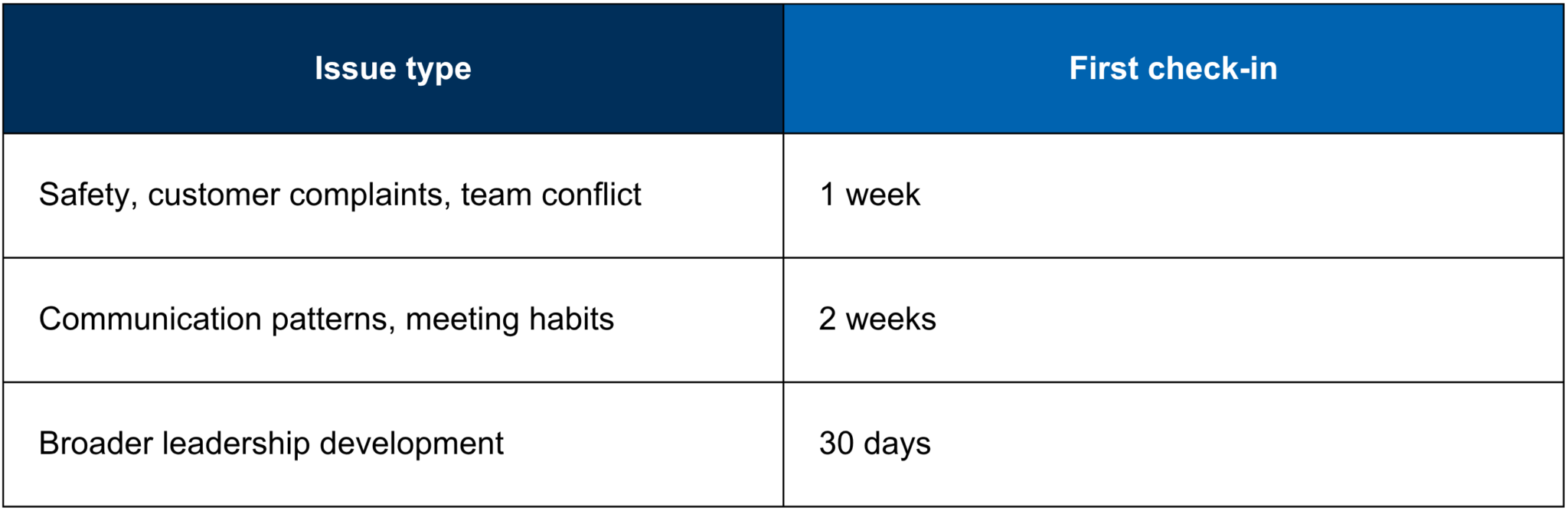
At the same time, be clear about the standard that must be met going forward. Explain which behaviour needs to stop, what the consequences will be if it continues, and agree on regular check-ins to review progress. Scheduling follow-up conversations—perhaps after two weeks and again after 30 days—reinforces accountability, provides an opportunity to recognise improvement, and ensures the conversation leads to lasting change rather than becoming a one-off discussion.
Step 11: Respond to Defensiveness Without Lowering the Standard
It’s natural for managers to become defensive when receiving feedback, particularly if they feel their judgement or performance is being challenged. The key is to acknowledge their reaction while keeping the conversation focused on the behaviour that needs to change.
If emotions begin to rise, calmly bring the discussion back to the facts. For example: “I understand this is frustrating. Let’s focus on what happened on Tuesday and what we can do differently next time.” If the conversation shifts towards other people or past events, redirect it by saying, “I’m talking about what I observed and the impact it had.” And if the discussion is no longer productive, it’s perfectly reasonable to pause and continue later, ensuring everyone has time to reflect before returning with a clear focus.
Avoid introducing unrelated issues or relying on second-hand information. Keep the conversation centred on behaviours you’ve personally observed and the outcomes they created. If your manager leaves without a clear understanding of what needs to change, it’s unlikely the feedback will lead to meaningful improvement.es without clear takeaways, the responsibility for that outcome rests with you, not them.
Step 12: Follow up with a Written Summary
A short follow-up email within 24 hours helps reinforce the conversation and creates a shared understanding of what was discussed. It reduces the chance of misunderstandings later and gives both you and your manager a clear reference point for the agreed actions. Keep the recap concise and include four key elements: the behaviour that was discussed, the impact it had, the new expectation going forward, and when you’ll review progress. For example, summarise the specific behaviour you observed, explain its effect on the team or business, outline what you’d like to see happen next time, and confirm the date of your follow-up meeting.
A simple written summary keeps everyone aligned, reinforces accountability, and provides a useful record of the discussion should the issue need to be revisited in the future.start.
Step 13: Follow Up Until the New Behaviour Becomes Habit
One feedback conversation is rarely enough to create lasting behavioural change. Think of the process as developing a new skill—it requires practice, observation, coaching, and reinforcement over time. Before the meeting ends, agree on a follow-up schedule that reflects the significance of the issue. Regular check-ins help maintain momentum, reinforce progress, and provide opportunities to address any challenges before old habits return.
When your manager demonstrates the behaviour you’re looking for, recognise it with specific, meaningful feedback. Rather than offering general praise, highlight exactly what they did well and the positive impact it had. For example: “I noticed you invited input from the team before making the decision, and it kept everyone engaged and aligned throughout the meeting.” Specific recognition reinforces the behaviours you want to see repeated and makes it clear what success looks like.
If the manager slips back into old habits, address it promptly—ideally within 24 to 48 hours. Briefly revisit the situation, remind them of the agreed expectation, and work together on how they’ll handle it differently next time. Timely feedback prevents unwanted behaviours from becoming established again and helps the new habit become a consistent part of their leadership style.
Putting It Together: A Practical Example
Here’s how the entire process might look in a real world situation..
The scenario : You’ve recently promoted a manager, but during team meetings they regularly interrupt people or move the discussion on before everyone has had a chance to contribute. As a result, team members stop sharing their ideas, and important conversations end up happening afterwards instead of during the meeting.
The conversation (Facts → Impact → Expectation):
“In our last two team meetings, I noticed you interrupted Sara and Miguel before they’d finished sharing their thoughts. When that happens, valuable ideas are missed and the team continues discussing decisions after the meeting rather than reaching agreement together. At our next meeting, I’d like you to pause before making a decision, invite input from at least two team members, then summarise the discussion before moving on.”ause, ask for two inputs, then summarise and choose.”
The follow-up: “I’ll look out for that approach at Tuesday’s meeting, and if it’s working we’ll know the team is contributing more openly and decisions are being made in the room. Let’s catch up on Friday morning to see how it went.”
This simple structure – describe the behaviour, explain its impact, agree on the new expectation, and schedule a follow-up—provides a clear framework you can use in almost any feedback conversation.
Frequently Asked Questions
Why does manager feedback often fail?
Manager feedback most often fails because it is too vague to act on, arrives long after the fact, or lands as personal criticism rather than a clear path to improvement. Owners also tend to soften the message or delay it to protect the manager’s authority, which lets the problem compound.
How do you give feedback to a manager without undermining their authority?
Keep the conversation private, focus on observable behavior rather than personality, and frame the feedback around business standards you both share. Correcting a manager in front of their team weakens their credibility with the people they lead, which makes the original problem harder to solve.
How specific should feedback to a manager be?
Specific enough that both parties can verify whether the behavior happened. That means two to three concrete examples with a date, a setting, and a business impact, not a general impression. One vague observation is easy to dismiss; two specific examples tied to a downstream effect are much harder to ignore.
When should a manager feedback conversation be escalated to a formal discussion?
Escalate when the same behavior has appeared more than once and is affecting customers, quality, or team morale. A one-time mistake warrants a quick correction. A repeated pattern warrants a dedicated meeting with documented expectations, a support plan, and a scheduled follow up.