Identify and Align High-Performance Leadership Teams to Ensure Lasting Success

A company’s success is not solely determined by its products, services, or even the vision of its founder—it is driven by the strength of its leadership team. The ability of senior leaders to align, communicate effectively, and execute on a shared strategy separates thriving businesses from stagnant ones.
Yet, many leadership teams struggle to reach their full potential. Studies show that nearly 60% of leadership teams admit they are not operating at peak performance. The reality is that many businesses function with a group of capable individuals rather than as a cohesive, high performing team working toward a common goal.
When leadership teams are not fully aligned, the consequences ripple through the entire business—poor execution, slow decision-making, internal miscommunication, and lack of accountability. These issues lead to missed opportunities, operational inefficiencies, and ultimately, a weaker business.
This blog explores what makes high performing leadership teams different, the barriers that hold teams back, and best practices for unlocking leadership potential. It also introduces StratPro, a methodology that helps business leaders transform their leadership teams to drive growth, profitability, and long-term success.
The Reality of Leadership Teams: High-Performing vs. Dysfunctional
What Does a Dysfunctional Leadership Team Look Like?
Many leadership teams operate in survival mode, focusing only on putting out fires rather than driving long-term success. According to renowned business management expert Patrick Lencioni, team dysfunction stems from:
Lack of Trust
Team members hesitate to be open, leading to guarded communication and reluctance to collaborate.
Fear of Conflict
Teams avoid difficult conversations, which leads to unresolved tensions and artificial harmony rather than real alignment.
Lack of Commitment
Even when leaders verbally agree to a plan, there is no real buy-in or ownership of outcomes.
Avoidance of Accountability
Without shared accountability, projects stall, performance suffers, and leadership credibility erodes.
Focus on Individual Success Over Team Success
When leaders prioritise personal agendas over organisational goals, silos form, and collaboration suffers.
These teams lack clarity, alignment, and effective execution, which hinders the company’s ability to scale, innovate, and compete.
What Do High-Performing Leadership Teams Do Differently?
High-performing leadership teams function as a unified force rather than a collection of individuals.
Research on the most effective teams—including a study of 180 high-performing teams by Google—identifies five key attributes:
- Psychological Safety: Team members feel comfortable expressing ideas and taking risks without fear of blame.
- Dependability: Leaders follow through on commitments, setting a standard for accountability and execution.
- Structure & Clarity: Roles, responsibilities, and expectations are clearly defined and aligned with the company’s strategic goals
- Meaning: Team members understand why their work matters, which increases motivation and engagement.
- Impact: Leaders have a clear view of how their efforts contribute to the bigger picture, making them more strategic and results-driven.
By focusing on alignment, communication, accountability, and execution, high-performing leadership teams create stronger organisations with greater financial performance and long-term sustainability.

The Five Disciplines of a High-Performing Leadership Team
The StratPro methodology provides a structured approach to leadership transformation, built on five key disciplines that drive strategic alignment, collaboration, and execution.
1. Team Alignment: Uniting Around a Common Purpose
Alignment is the foundation of a strong leadership team. Without it, decisions become fragmented, priorities become unclear, and execution falters.
Key Aspects of Team Alignment:
- Clarity of Roles: Does everyone understand their role in executing the company’s vision?
- Unified Goals: Are leadership team members working toward the same strategic objectives?
- Collaboration Over Silos: Does each department function independently, or is there a cross-functional approach to problem-solving?
“When leadership teams are truly aligned, they work with focus, efficiency, and shared accountability, enabling the business to move forward as a cohesive unit rather than as a collection of disconnected functions.”
2. Shared Vision: Creating a Unifying Direction
A company’s vision cannot live in the head of the business owner alone. The most successful organisations have a vision that is:
- Clearly defined and understood by the leadership team.
- Communicated consistently across the company.
- Actionable, meaning it is translated into strategic priorities and measurable objectives.
A shared vision keeps the leadership team aligned and decision-making focused on long term success rather than short-term reactions.
3. Productive Communication: Strengthening Collaboration & Decision-Making
Miscommunication is one of the biggest threats to leadership effectiveness. It causes delays, misunderstandings, and frustration, ultimately slowing down the business.
Best Practices for Stronger Communication:
- Encourage Constructive Debate: Healthy conflict leads to better decisions and prevents groupthink.
- Set Communication Norms: Clear guidelines for how team members discuss ideas, share feedback, and resolve issues improve efficiency.
- Listen With Intent: Teams that actively listen foster trust and mutual respect, leading to higher engagement.
When communication improves, decision-making speeds up, misunderstandings decrease, and leaders work together more effectively.

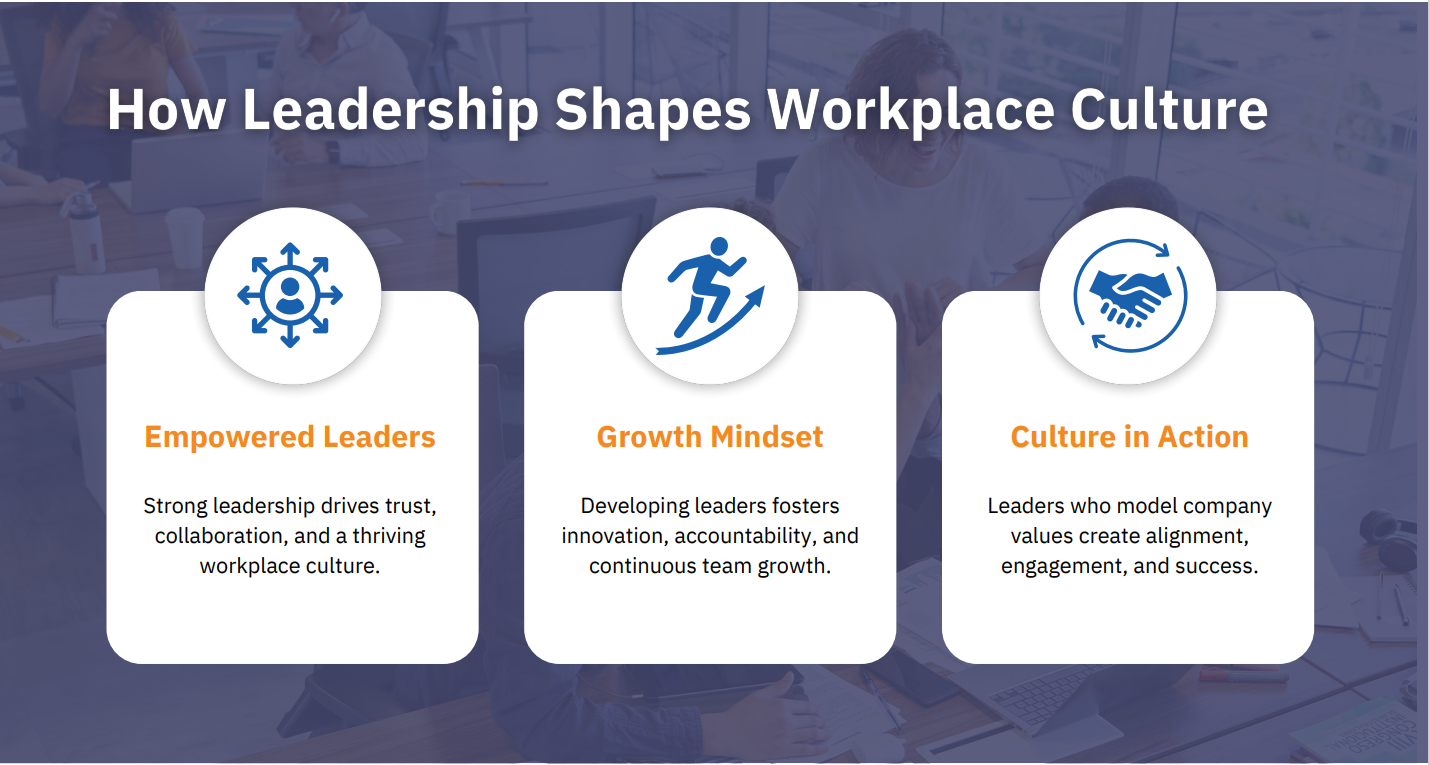
4. Shared Values: Building a Strong, Unified Culture
Values are the DNA of a company’s culture. They define how leaders make decisions, hire employees, and
interact with customers.
High-performing leadership teams:
- Use values as a decision-making filter.
- Ensure that hiring and promotions align with company culture.
- Actively model company values in daily operations.
A values-driven culture strengthens employee engagement, improves retention, and enhances customer trust.

5. Execution & Accountability: Turning Strategy into Action
A brilliant strategic plan is useless without execution. The best leadership teams hold themselves and each other accountable for follow-through and measurable results.
Keys to Execution & Accountability:
- Define clear success metrics for leadership priorities.
- Hold regular accountability meetings to track progress.
- Foster a culture of ownership where leaders take responsibility for results.
Accountability ensures that strategic initiatives don’t just sit on a whiteboard—they get implemented, tracked, and optimised.
The Business Case for a High-Performing Leadership Team

The benefits of a well-aligned leadership team extend beyond internal collaboration—they drive measurable
business success:
- Faster, Smarter Decision-Making: Aligned teams reduce delays, confusion, and indecision.
- Stronger Financial Performance: Companies with effective leadership teams report higher profitability
and growth. - Higher Business Valuation: Strong leadership teams increase the value of a company, particularly for
succession planning or exit strategies. - More Time for Business Owners: When a leadership team is fully functional, business owners can step back and focus on growth, innovation, or even personal goals.
How StratPro Transforms Leadership Teams
StratPro is a proven framework designed to help leadership teams achieve better alignment, clearer vision, improved communication, and stronger execution.
Unlike traditional leadership development programmes, StratPro is an actionable, hands-on methodology that enables leadership teams to:
✔ Define a shared vision that aligns the team.
✔ Establish high-impact strategic priorities that drive growth.
✔ Improve team communication and decision-making processes.
✔ Develop a culture of accountability that ensures execution.
✔ Create a long-term leadership roadmap for sustainable success.
With businesses worldwide already benefiting from StratPro’s methodology, leadership teams that adopt this approach unlock their full potential and build stronger, more scalable businesses.
Are You Unlocking the Full Potential of Your Leadership Team?
Every business leader wants to build a thriving company. The key to success is not just a great product or service—it’s a strong leadership team that is aligned, accountable, and results-driven.
By focusing on team alignment, shared vision, productive communication, shared values, and disciplined execution, businesses can unlock the full power of their leadership team and create a long-term competitive advantage.
For business owners ready to take their leadership team to the next level, StratPro provides the roadmap to make it happen.